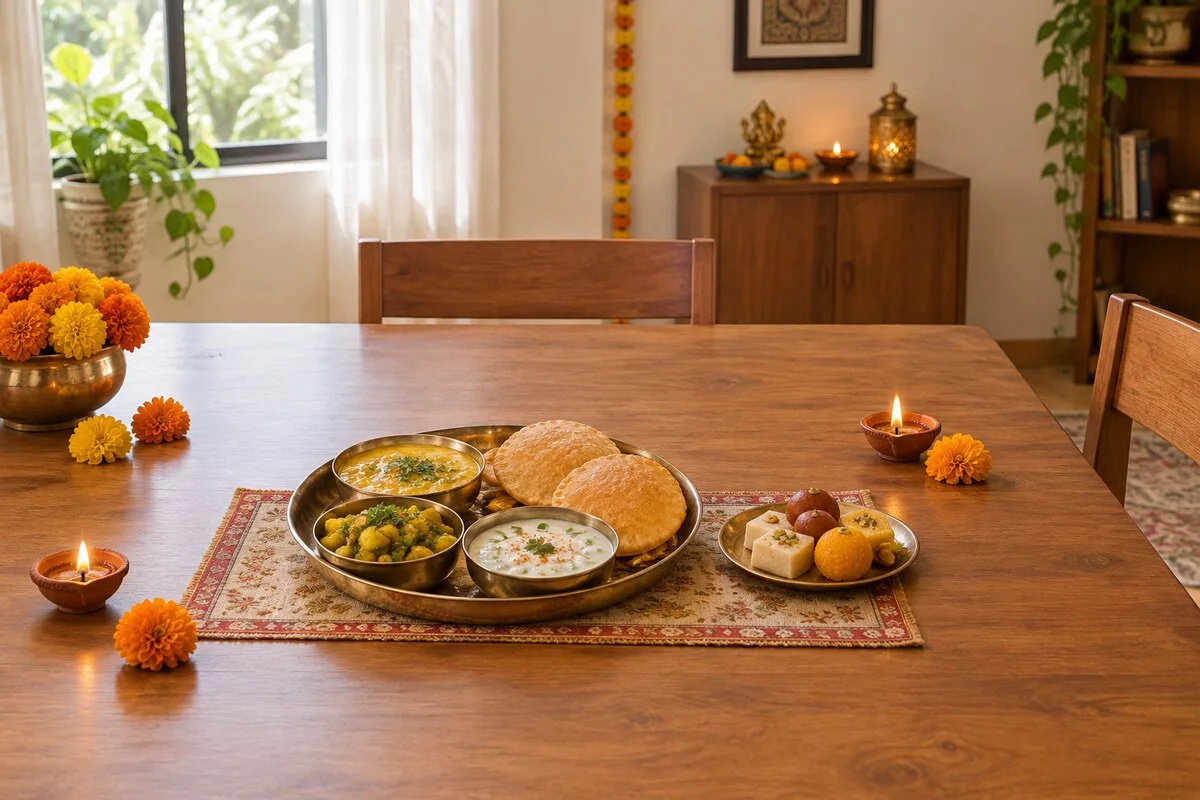
Diwali is on Sunday this year, and if the house is not ready, the menu is not planned, and the gift pile is still a vague intention, welcome to the majority. Most households do their real Diwali preparation in the final two or three days, and it works out fine - not because they do everything, but because they do the right things. This guide is for that window: what actually matters when time is short, what can wait, and what to simply let go. No week-long spreadsheets, no deep-clean marathons, just a clear-eyed pass through the days that are left.
Start with a short list, not a long one
The trap of last-minute prep is the endless list. Write down everything you think needs doing and the week already feels lost. Instead, make a short list with only four headings: guests, food, puja, home. Under each, write the two or three things that would genuinely embarrass you if left undone. That is your list. Everything else is optional decoration for a day when you have spare time, which you do not.
A short list does something a long one cannot: it gets finished. And a finished short list feels far better on Diwali morning than an abandoned long one.
The home: clean the rooms guests actually see
Guests experience about a third of your home: the entrance, the living room, the bathroom, and whatever path connects them. That third is where the effort goes. Clear the entrance first - it sets the tone and takes minutes. Then the living room surfaces, the sofa cushions, and the bathroom, which deserves real attention because every guest uses it.
The rest of the house can be honest. Bedrooms with doors that close, the study, the balcony you meant to reorganize - none of these are part of anyone's Diwali evening. One useful rule for the final days: if a guest will not stand in it, do not deep-clean it. A quick daily reset of the visible rooms beats one exhausting whole-house blitz that leaves you too tired to enjoy the festival you were cleaning for.
If rangoli or flowers are part of your tradition, keep them near the entrance where they greet people, and keep the design small enough to finish happily.
Food: cook less, earlier, and buy the rest without guilt
The kindest thing you can do for yourself is shrink the menu. Guests remember one or two dishes done well far more than eight dishes done frantically. Pick a small spread: one or two snacks, one main spread or a few favourites, and sweets. That is a feast by any honest measure.
Whatever can be made ahead, make ahead. Chutneys, dry snacks, doughs, and most mithai keep well for a day or two, and every dish finished early is an hour of festival day returned to you. The day before Diwali is for finishing, not starting.
And buy what you do not have time to make. Good sweets from a good shop are part of most families' Diwali and always have been. A simple trick that works well: serve bought sweets on your own plates, next to one thing you made. The table looks abundant, the work stays sane, and nobody at the table is counting which is which.
Set up a small snack-and-drinks spot where guests can help themselves - a tray with nuts, something savoury, water, and glasses. It quietly removes half the hosting work of the evening, because refilling a tray is far easier than playing waiter through a full room.
Puja and evening essentials: gather one basket
The evening puja has a way of sending people hunting through cupboards at the exact moment the diyas should already be lit. Avoid it with one basket gathered a day or two ahead: diyas, oil or ghee for them, wicks, matches or a lighter, flowers, incense, the sweets or fruit for prasad, and anything your family's puja specifically uses. Check it once against your own tradition, close the basket, and put it where the puja will happen.
Do the same with the small things that run out at the worst time: candles, matches, gift bags and tape if you are wrapping anything, and a few extra boxes of sweets for unexpected guests or last-minute visits. These are cheap to have and oddly expensive to be without.
Guests: prepare for the people, not just the rooms
If anyone is staying over, their comfort needs only a few things: clean bedding, a towel, a cleared surface for their things, and a working bathroom. Ten minutes per room, no more. For guests who come for the evening, think about seating before they arrive - a few chairs pulled in early saves the awkward shuffle later - and keep a simple drinks plan so you are not improvising while the doorbell rings.
The most useful hosting habit of the final days is also the least festive-sounding: decide in advance what you will say yes to. If relatives call asking what to bring, let them bring something. Sweets, snacks, flowers, a dessert - people genuinely like contributing, and every accepted offer is work off your list.
The day before: a calm final evening
Resist starting anything new on the last day. No new recipes, no reorganized cupboards, no ambitious rangoli redesign at midnight. The final evening is for finishing touches, laying out clothes for the next day, charging phones for the photos, and setting out the puja basket where it belongs.
Then protect the night. A reasonable bedtime the day before Diwali is the single most underrated preparation there is, because the festival day itself is long, loud, and late. Most people enjoy the evening far more when they did not spend the previous one scrubbing until two in the morning.
What to let go
Here is the permission slip, if you need one: nobody remembers whether the curtains were washed. Guests remember whether the house felt warm, whether there was enough to eat, and whether the host was present or frantically disappearing into the kitchen. A slightly imperfect home with a relaxed host beats a spotless one with an exhausted host every single time.
The festival is the point. The preparation is only there to serve it, and the moment the preparation starts eating the festival, it has stopped doing its job.
Frequently asked questions
How do I prioritize when there are only a couple of days left?
Most people do well with the four-heading list: guests, food, puja, home, with two or three must-do items under each. It keeps the work finite and focused on what visitors will actually experience. What counts as must-do varies from household to household, so adjust it to your own family and plans.
Is it okay to buy sweets and snacks instead of making everything?
For most families, yes, and it has long been normal. Shops do their best business at Diwali precisely because homemade-everything is not realistic for most households. Serving bought items nicely, alongside one or two things you made, works well for most hosts.
How much cleaning is actually enough?
The rooms guests will use - entrance, living room, bathroom - are where most people concentrate, and that is usually enough. Deep-cleaning the whole house in the final days tends to cost more energy than it returns, though every home and every guest list is different.
What do I do about unexpected guests?
Most hosts find a small reserve solves this: an extra box or two of sweets, some savoury snacks, and enough drinks. Unexpected guests at Diwali expect warmth, not a banquet, and a ready tray covers nearly every situation.
How do I keep last-minute prep from becoming overwhelming?
A short finished list helps more than any technique. Most people also find it easier when tasks are shared - letting family members own whole areas, and saying yes when guests offer to bring something. If the pressure feels bigger than the festival, that is usually a sign the list needs cutting, not the effort increasing.
Where FitByVeda fits
FitByVeda is an Ayurvedic nutrition brand, and our shop has two ranges you may come across: Weight Gain (Fit Gain range) and Weight Loss (Fat Loss range). Ingredient lists and product details are on fitbyveda.in under Products, if you are curious. This article is general lifestyle reading, not a product recommendation - the ideas above stand on their own.
This article is general lifestyle information only and is not medical advice, a diagnosis, or a treatment plan. Everyone's body and health situation are different. If you have a medical condition, or concerns about your health, please consult a qualified doctor before changing your routine.
Your health, our care
Ready to start your wellness journey?
Shop 100% Ayurvedic supplements. Every order includes free 1-on-1 dietician support.