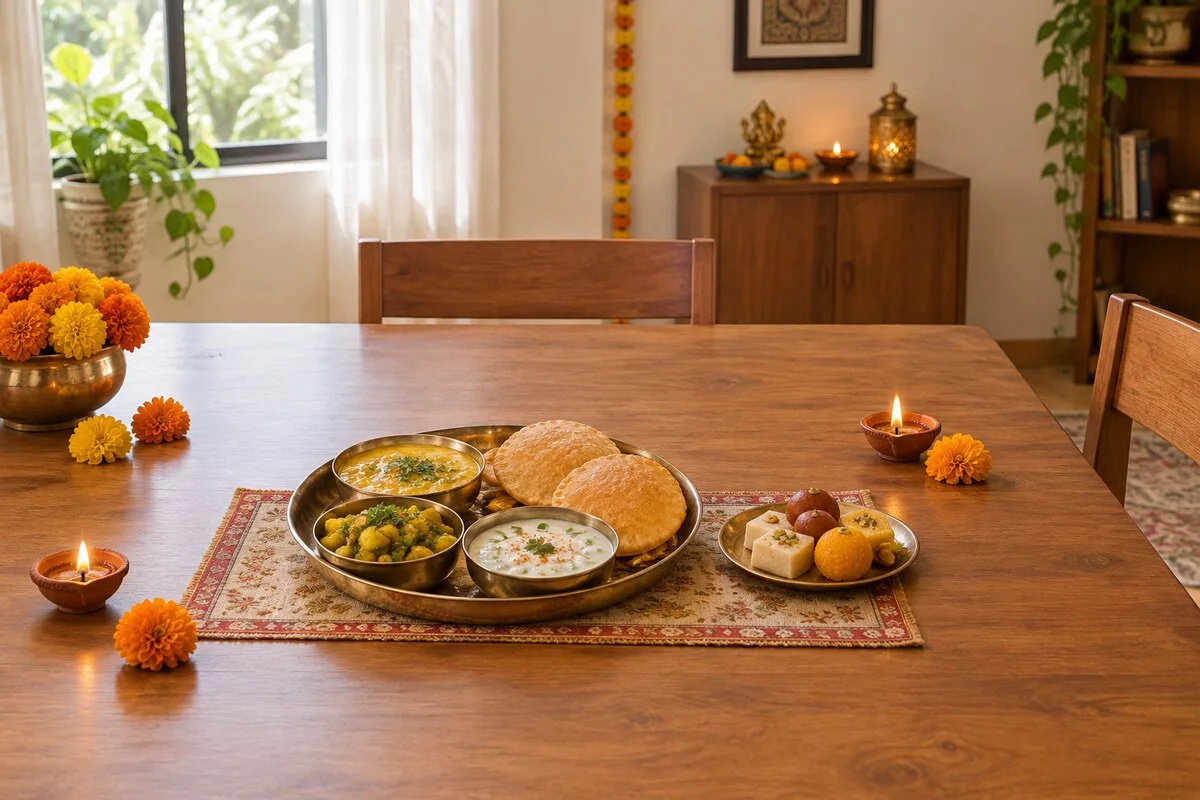
Diwali day has its own rhythm, and it rarely matches the one your body is used to. The house fills up early, sweets appear before breakfast, lunch drifts into the afternoon, dinner lands close to midnight, and sleep comes later still. None of this needs fixing - it is the festival. But a little pacing goes a long way toward actually enjoying the day instead of surviving it. This guide walks through Diwali day from morning to night: how to eat in a sensible order, how to keep your energy steady, and how to end the night well. No strict rules, no guilt, just a calmer way through a very full day.
Why Diwali day feels harder than the week around it
The days before Diwali are busy, but the day itself is different in kind. Everything happens at once: cooking, cleaning the last corners, welcoming guests, the evening puja, gifts, and a table that never quite empties. Meals lose their usual timing. Tea and snacks replace lunch. By the time dinner is served, most people have been eating small amounts for hours without ever sitting down to a real meal.
Sleep usually takes the biggest hit. The night runs late, and the next morning often starts early with more visitors. Understanding this shape is most of the battle - once you see where the day actually strains you, the fixes are small and obvious.
Start the morning like an ordinary day
The single most useful habit on Diwali morning is a normal one: eat a real breakfast. Something with protein and substance - eggs, dal, curd with fruit, poha, paratha, whatever your kitchen already makes. A grounded breakfast steadies your appetite for the rest of the day, and it makes the first round of sweets a choice rather than a reflex.
Get some daylight and a little movement if you can, even a short walk while the house is still quiet. Keep water nearby from the start. Festive days are low on water almost by default, and much of what feels like tiredness by evening is simply that. None of this is a program. It is just Friday morning habits, kept on a Sunday that happens to be Diwali.
Eating through the day: a simple order that works
Sweets will be part of the day, and they should be. The question is only where they sit. The order that suits most people is meals first, sweets after. When mithai follows a proper plate of food, a piece or two feels like enough. When it replaces the meal, you graze for hours, never feel fed, and end the day both overfull and undernourished.
At the main meal, build a plate the way you would on any balanced day: a generous share of vegetables or dal, a protein, then rice or roti. Festive cooking already includes these - the sabzi, the dal, the poori, the raita. You do not need to eat differently from your family. You only need the plate to look like a meal before the sweets arrive.
Between meals, keep snacks ordinary: nuts, fruit, roasted chana, chaas. Offer them to guests alongside the mithai. Most people at a Diwali table are quietly relieved when something plain is available next to the sweets.
One practical note for hosts: tasting while cooking counts as eating. By evening, a cook may have had a full extra meal in spoonfuls. It is worth a small sit-down plate at some point in the afternoon, even five minutes, so the day does not run entirely on tasting spoons and tea.
Keeping your energy steady without disappearing
The middle of Diwali day is when energy usually dips - lunch is late, the house is loud, and the evening still holds the puja, the diyas, and dinner. A few small choices carry most people through comfortably.
Take ten quiet minutes in the afternoon if you can find them. Not a nap that costs you the evening, just a closed door, a glass of water, and no conversation. It resets more than another cup of tea would.
Go easy on the tea-and-sweets cycle. Chai is part of hosting, but three or four cups across the afternoon, each with a piece of something sweet, adds up to a jittery, hungry tiredness by evening. Alternate with water or chaas, and let one or two cups be the ones you actually sit with and enjoy.
Say yes to help. The host who does everything alone is usually the person most exhausted by dinner. Let guests bring sweets, let someone else light the diyas with the children, let the dishes wait. The day goes better when the work is shared, and most guests genuinely want a job.
The evening: puja, dinner and the late table
Evening is the heart of Diwali, and it should be unhurried. A few things make it easier on the body without taking anything away from it.
If dinner will be late, do not arrive at it starving. A small early-evening plate - some nuts, fruit, or a bowl of dal - takes the edge off, so dinner becomes a meal you taste rather than one you fall into.
At dinner, the same simple order applies: food first, sweets after. Sit down to eat if you can, even when the table is crowded and informal. Eating seated and slowly is one of those ordinary habits that quietly decides how you feel an hour later.
Alcohol, where it is part of the celebration, sits best alongside food and water, not in place of them. This is ordinary festive common sense, and most people already know their own limits - the only Diwali-specific note is that a long, tiring day lowers them slightly.
Ending the night well
Diwali night ends late, and trying to force an early night usually fails. What helps instead is a soft landing. When the evening starts to wind down, begin dimming the house a little - the diyas can stay, but the bright kitchen lights and the loud music can go. Stop eating about an hour before you actually lie down, so sleep does not have to compete with a very full stomach.
Keep the next morning kind. Diwali falls on a Sunday this year, which is a small gift: there is no office morning forcing the issue. Let the household wake up slowly, eat a normal breakfast, and let routine return on its own. One late night is simply one late night.
What not to worry about
A word against the guilt that sometimes follows festive eating. One day of sweets and a late dinner does not undo months of ordinary habits, and it does not need to be punished the next morning with skipped meals or a desperate workout. The body handles occasional festive days the way it handles occasional quiet ones - by averaging them out over the weeks around them.
Be equally wary of the idea of a cleanse or detox fix afterward. Your normal routine returning is what does that job, on its own and without products. The day after Diwali needs only breakfast, water, daylight, and an ordinary night of sleep.
Frequently asked questions
Is it fine to eat sweets freely on Diwali day?
For most healthy people, a day that includes a few pieces of mithai is simply a festive day, not a health event. What tends to make people feel unwell is sweets replacing meals across many hours. Meals first, sweets after, works well for most people, though everyone has their own tolerance and their own reasons to be more careful.
Should I skip meals during the day to make room for the big dinner?
For most people this backfires. Arriving at dinner after a day of near-fasting usually means eating very fast and very late, which is the least comfortable combination. Small ordinary meals through the day make the late dinner easier to enjoy.
How do I handle guests offering sweets all day?
A piece accepted with tea is part of the festival, and refusing everything is neither necessary nor much fun. Most people find it easy to accept slowly - one piece here, one there - rather than a full serving at every offer. Guests rarely count.
What about children and elders at the table?
Children will graze on sweets whatever the plan, and one day of it is fine for most. Elders often prefer the ordinary snacks - the nuts, the chaas, the fruit - so keeping those visible serves them quietly. Anyone with a medical condition or a prescribed diet should follow the guidance they already have from their own doctor.
Does one late night really matter?
For most people, no. A single late night is recovered by ordinary sleep over the following nights. What wears people down is several short nights in a row, so if the festive week has already been late, it is worth letting the night after Diwali be an early one.
Where FitByVeda fits
FitByVeda is an Ayurvedic nutrition brand, and our shop has two ranges you may come across: Weight Gain (Fit Gain range) and Weight Loss (Fat Loss range). Ingredient lists and product details are on fitbyveda.in under Products, if you are curious. This article is general lifestyle reading, not a product recommendation - the ideas above stand on their own.
This article is general lifestyle information only and is not medical advice, a diagnosis, or a treatment plan. Everyone's body and health situation are different. If you have a medical condition, dietary restriction, or concerns about your health, please consult a qualified doctor before changing your routine.
Your health, our care
Ready to start your wellness journey?
Shop 100% Ayurvedic supplements. Every order includes free 1-on-1 dietician support.