If your clothes feel a little tighter every winter, you are not imagining it. Many people gain a small amount of weight between November and February, and researchers who study seasonal eating see the same pattern repeat year after year. The reasons are ordinary: appetite, movement, sleep and daylight all shift at the same time. None of this means your metabolism is broken, and for most people a few steady habits are enough to keep the season from snowballing.
Why winter makes weight gain easier
It is rarely one big thing. It is several small nudges in the same direction.
Comfort food calls louder. When it is cold and dark outside, a warm, heavy meal simply sounds better than a cold salad. That pull is real, and it is completely normal.
Movement quietly drops. Shorter days, cold mornings and busy festive calendars make the evening walk easy to skip. The activity you stop doing does not announce itself, but over a whole season it matters.
Sleep and daylight shift. Less sunlight can affect mood and energy, and short or irregular sleep is linked with stronger cravings and a bigger appetite the next day.
The food calendar stacks up. In India, winter arrives with back-to-back eating occasions: Diwali sweets, wedding season, Christmas and New Year, and generous home cooking in between. One piece of mithai changes very little. Weeks of "just one more" add up. Late nights are part of the season too, and they quietly add extra snacking hours to the day.
The winter metabolism myth
You may have heard that the body burns far fewer calories in winter, or that gaining weight in cold months is unavoidable biology. The evidence points the other way. For most people, daily calorie needs barely change across seasons, because modern life happens mostly indoors, in heated rooms. What actually changes is behaviour: what we feel like eating, how much we move, and how well we sleep. That is good news, because behaviour is the part we can influence.
Simple habits for the season
Keep a steady meal rhythm. Skipping meals to "save space" for a rich dinner usually backfires - you arrive far hungrier and portions grow. Regular meals, with something lighter earlier in the day before a big evening, work better for most people.
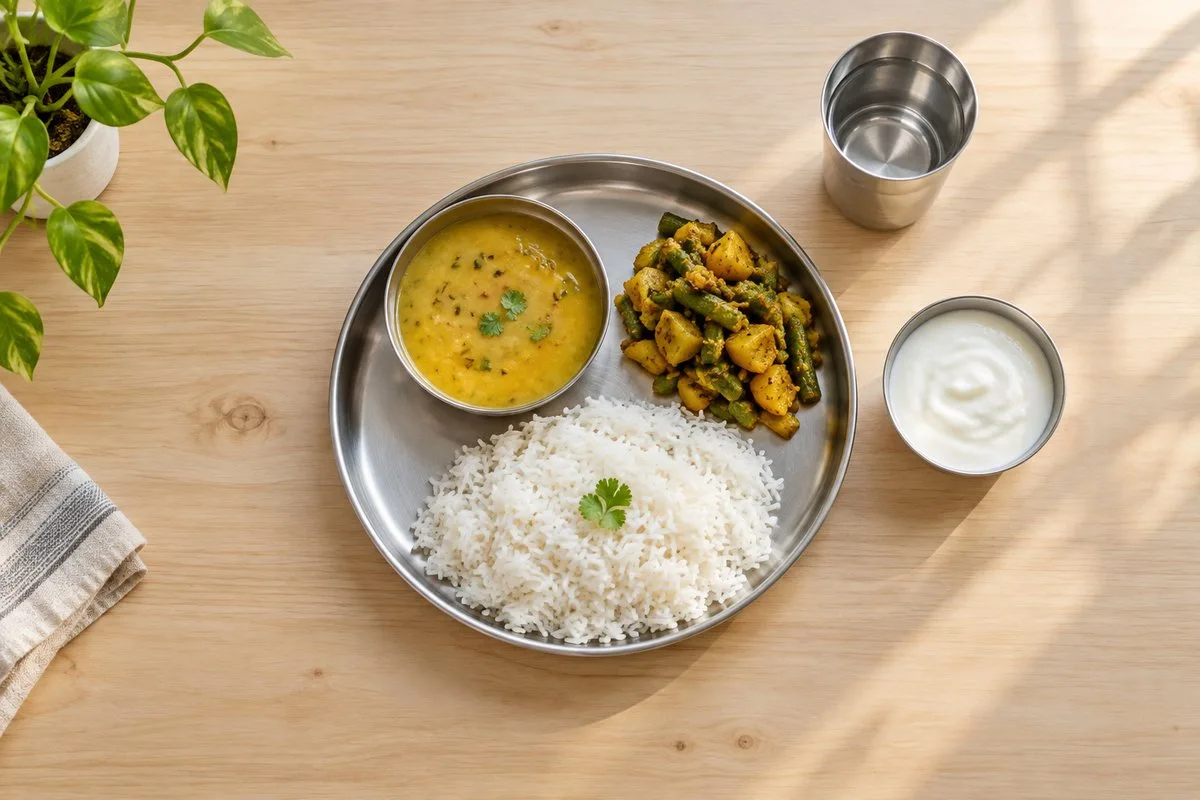
Build comfort food that fills you up. Winter comfort food does not have to be heavy. Dal, rajma, chole, vegetable khichdi, soups, and egg or paneer dishes are warm, filling and protein-rich. Add seasonal vegetables like carrots, peas, spinach and methi, and let them take up a good share of the plate before the richer dishes.
Start the day with protein. A breakfast with dal cheela, besan chilla, eggs, paneer bhurji, curd, or sprouts keeps most people full far longer than a sweet or refined start, and it sets the tone for the whole day.
Watch the warm drinks, not just the food. Sweetened chai, creamy hot chocolate, packaged soups and festive sherbets can carry a surprising amount of sugar across a day. You do not have to give up your chai - simply being aware of how many sweet cups happen daily is often enough to make an easy adjustment.
Have an indoor movement backup plan. The goal is not a perfect workout routine; it is not disappearing from movement until spring. An after-lunch walk on a warmer afternoon, a short home workout while dinner cooks, taking the stairs, or a stretch break every hour all count. Pick the version you will actually repeat.
Get some daylight when you can. A short spell outside in morning or afternoon light supports mood, energy and sleep timing for many people, and it often doubles as a gentle walk. In Indian winters, midday sun is usually pleasant enough to make this easy.
Protect your sleep. A consistent bedtime is one of the most underrated winter habits. Rested people generally find it easier to make calm food choices than exhausted people do.
Be practical about festive leftovers. Mithai and namkeen that sit out on the counter get eaten. Keep them stored away, serve yourself a portion instead of eating from the box, and share or pass on sealed boxes you do not need.
Weigh yourself sensibly if you weigh yourself at all. Salty food and late meals cause temporary water retention, so a single morning reading after a feast means very little. A weekly pattern tells you far more than any one day.
None of these habits asks for heroic willpower. The season works through small nudges, and small, repeatable nudges in the other direction are what answer it best for most people.
What winter weight gain is not
It is not a personal failure, and it is not proof that your metabolism has stopped working. For most people it is a predictable response to a season that nudges eating up and movement down.
It is also worth saying clearly: if your weight changes suddenly or without explanation, or comes with persistent low mood, unusual fatigue, or other symptoms that worry you, that is a conversation for a doctor, not a blog article. Seasonal patterns are normal; symptoms are worth checking.
Where FitByVeda fits
FitByVeda sells Ayurvedic supplements in two ranges: Weight Gain (the Fit Gain range) and Weight Loss (the Fat Loss range). Ingredient lists and product details are on fitbyveda.in under Products. This article is general lifestyle information, not a product recommendation, and no supplement replaces everyday habits like the ones above.
Frequently asked questions
Is winter weight gain normal?
For most people, yes. Small seasonal changes in appetite, activity and weight are common and are not a sign that something is wrong. Every body responds a little differently.
Does metabolism slow down in winter?
For most people, research suggests calorie needs change very little across seasons in modern indoor life. The bigger drivers of winter weight gain are eating, movement and sleep habits rather than a slower metabolism.
Do I need to eat more in winter to stay warm?
For most healthy people, no. Unless you work outdoors in the cold for long periods, your calorie needs are unlikely to change much just because the weather did. Feeling hungrier in winter is real for many people, but it is a preference signal, not necessarily a need.
How do I enjoy festive food without overdoing it?
For most people, the habits that work are simple: eat regular meals so you never arrive starving, serve yourself a portion instead of eating from shared boxes, fill part of the plate with protein and vegetables first, and take a short walk after big meals when you can.
When should I see a doctor about weight changes?
If weight changes are sudden, unexplained, or come with other symptoms like low mood, fatigue or changes in sleep, it is worth speaking with a qualified doctor who can look at your individual situation.
This article is general lifestyle information only and is not medical advice, a diagnosis, or a treatment plan. Everyone's body and health situation are different. If you have a medical condition, are pregnant, or have concerns about your weight or health, please consult a qualified doctor before making changes to your diet or routine.
Your health, our care
Ready to start your wellness journey?
Shop 100% Ayurvedic supplements. Every order includes free 1-on-1 dietician support.