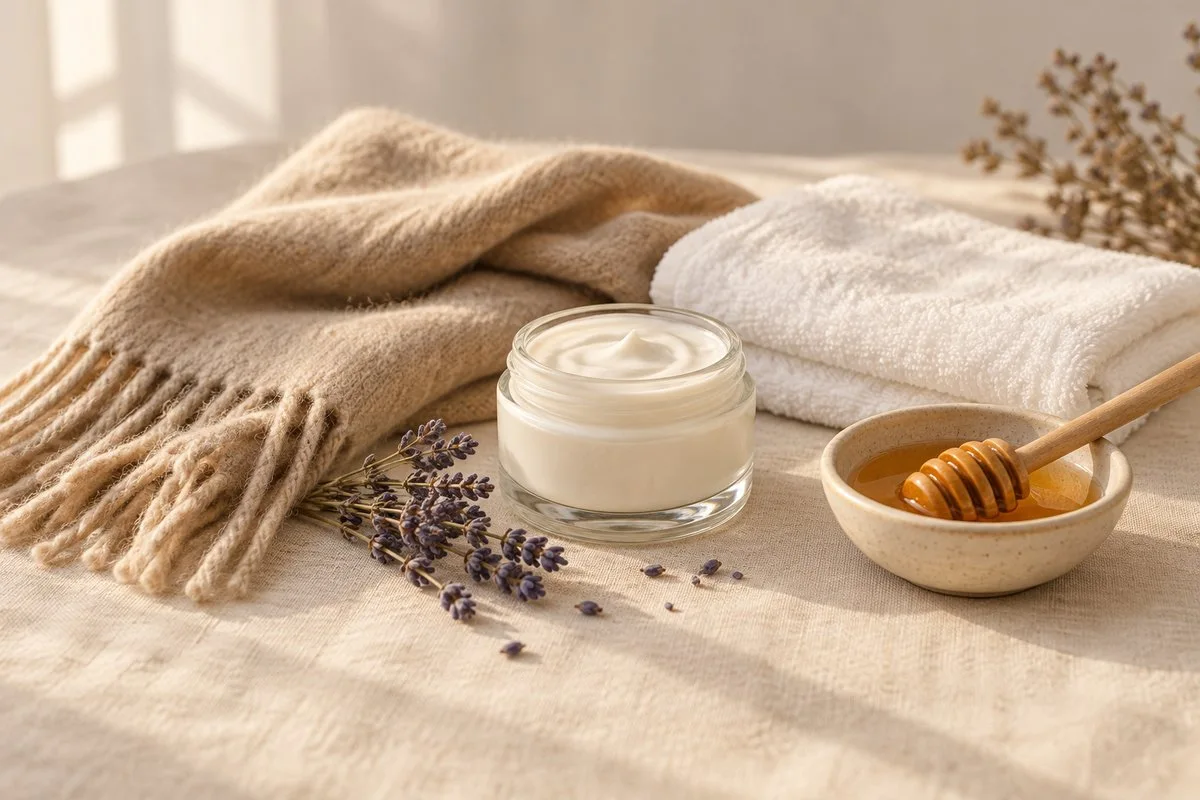
Winter skin does not need a new shelf of products. For most people it needs a few small habit changes: shorter lukewarm showers, moisturizer on damp skin, sunscreen even when it is cold, and gentler cleansing. Here is what actually matters, what is mostly myth, and where kitchen traditions like malai and honey genuinely fit.
Why skin feels different in winter
Cold air holds less moisture than warm air, so winter air is drier to begin with. Add indoor heaters, which dry the air further, and hot showers, which wash away the skin's natural oils, and you get the familiar winter pattern: tight cheeks, flaky forearms, itchy legs, chapped lips.
None of this means your skin is damaged or that something is wrong with you. For most people it is a normal seasonal response, and it responds to ordinary habits rather than expensive fixes. That is the good news hiding inside every itchy winter: the levers are small, cheap, and mostly in your bathroom routine.
The shower is where winter skin is won or lost
The single biggest winter skin habit is the shower itself. Hot water feels wonderful on a cold morning, but it strips the skin's surface oils far more aggressively than lukewarm water. The hotter and longer the shower, the drier the skin afterward.
The habit change is simple: turn the temperature down to comfortably warm rather than steaming, and keep the shower short. If the bathroom mirror is fully fogged, the water was probably too hot. You do not need to take cold showers or suffer through this - just step down from "as hot as it goes" to "pleasantly warm".
Pat dry with a towel instead of rubbing. Rubbing with a rough towel irritates skin that is already dry, while gentle patting leaves a little moisture behind, which is exactly what you want for the next step.
Moisturizer works hardest on damp skin
Timing matters more than brand. Moisturizer does not add water to skin so much as trap the water that is already there, which is why applying it right after a shower - while the skin is still slightly damp - does far more than applying it to fully dry skin hours later.
Keep the bottle where you will actually use it: next to the towel, not inside a cupboard. A simple, fragrance-free moisturizer is enough for most people. Ingredients like glycerin, ceramides and petrolatum are the boring, well-studied workhorses of dry skin care, and they show up in products at every price point.
Do not stop at the face. Hands, elbows, knees, shins and feet are the places winter dryness usually shows first, and they are the places people forget.
Yes, you still need sunscreen
This is the most common winter skin myth: that sunscreen is a summer product. The sun's ultraviolet rays do not take the season off. They pass through clouds, and in north Indian winters, with clear skies and long hours outdoors in pleasant sun, unprotected exposure adds up across the season.
The habit is the same as in summer, just easier to forget: apply sunscreen to the face and any exposed skin in the morning, especially if you spend time outdoors around midday. If your skin feels drier in winter, a moisturizing sunscreen or a moisturizer followed by sunscreen both work for most people.
Gentle cleansing, not aggressive cleansing
Two opposite mistakes show up every winter. Some people stop washing their face properly because the skin feels dry and settled. Others scrub harder, trying to remove flakes. Neither helps.
Skin still collects oil, sweat and pollution in winter, so cleansing still matters. The fix is in the method: a mild, gentle cleanser instead of a harsh or heavily foaming one, and no rough scrubbing or exfoliating brushes on already-dry skin. Flakes come off on their own once the skin is moisturized. Scrubbing them off raw only starts the dry-irritated cycle again.
The kitchen shelf: malai, honey and oils
Indian homes have their own winter skin traditions, and they are worth enjoying as exactly that. Malai on the face before a bath, honey as a short face pack, coconut or mustard oil massage for dry limbs, ghee on chapped lips at night - these are household comforts many families have used for generations.
There is no need to dress them up as medicine. A kitchen ingredient is not going to treat a skin condition, and if a paste stings or irritates your skin, wash it off and skip it - a quick patch test on a small area first is a sensible habit for everyone. But as simple, familiar moisturizers in a winter routine, these traditions fit comfortably alongside everything above. Enjoy them for what they are.
Indoor air, water and the rest of you
Heaters and blowers dry out indoor air quickly. If a room feels parched, a bowl of water placed near the heat source adds a little moisture back into the air, and a humidifier does the same job more steadily. It is a small thing that many people find makes nights noticeably less itchy.
The rest is the unglamorous list that supports skin from the inside: drink water through the day even when you do not feel thirsty (winter blunts thirst for many people), eat your usual varied diet, and sleep enough. Gloves, scarves and lip balm are not vanity - they are barriers between your skin and cold wind.
When dry skin needs a doctor
Seasonal dryness is normal. Cracks that bleed, skin that weeps, patches that are red and inflamed, relentless itching that disturbs sleep, or dryness that ignores every habit change for weeks is a different matter. Those patterns can be eczema or another skin condition, and they deserve a dermatologist, not another home remedy. If you have a diagnosed skin condition, your doctor's guidance comes before anything in this article.
Where FitByVeda fits
FitByVeda sells Ayurvedic supplements in two ranges: Weight Gain (the Fit Gain range) and Weight Loss (the Fat Loss range). Ingredient lists and product details are on fitbyveda.in under Products. This article is general lifestyle information, not a product recommendation, and no supplement replaces the everyday skin habits above.
Frequently asked questions
Is hot water really that bad for skin in winter?
For most people, very hot showers make dryness noticeably worse because hot water strips surface oils quickly. You do not need cold showers - comfortably warm water and a shorter shower is the habit that helps. If your skin feels tight and itchy within an hour of bathing, the shower is the first place to look.
Should I stop washing my face in winter?
No. Skin still collects oil, sweat and pollution in the cold months, and skipping cleansing can lead to dullness and breakouts for many people. The winter adjustment is a gentler cleanser and no harsh scrubbing, not skipping washing altogether.
Do I really need sunscreen when it is cold outside?
For most people, yes. Ultraviolet rays reach your skin in winter too, including through cloud cover. If your face and hands are exposed during the day, a morning application of sunscreen is still a worthwhile habit, especially around midday.
Are home remedies like malai and honey good for dry winter skin?
They are well-loved household traditions that many people enjoy using in winter. They are not treatments for skin conditions, and they do not suit everyone - patch test first, and wash off anything that stings. For dryness that keeps coming back no matter what you try, a dermatologist is the right next step.
Why are my lips always chapped in winter no matter what I do?
Lip skin is thin and has no oil glands of its own, so it dries out fast in cold wind and dry indoor air. A simple lip balm helps most people, and a dab of ghee on the lips at night is a common household tradition. Resisting the urge to lick your lips matters too, since saliva evaporates and dries them further. Persistent cracking at the corners of the mouth is worth showing a doctor.
This article is general lifestyle information only and is not medical advice, a diagnosis, or a treatment plan. Everyone's body and health situation are different. If you have a medical condition, a persistent skin problem, or concerns about your health, please consult a qualified doctor or dermatologist before making changes to your routine.
Your health, our care
Ready to start your wellness journey?
Shop 100% Ayurvedic supplements. Every order includes free 1-on-1 dietician support.