When the first cold mornings arrive, most Indian homes reach for the same things they have reached for generations: haldi doodh, adrak chai, maybe a kadha someone swears by. These drinks are warm, comforting and genuinely worth enjoying. But it is worth being clear about what they are: comfort and tradition. No warm drink prevents or cures a cold, melts fat, or replaces sleep, food and movement - and understanding that actually makes the ritual better, because you can enjoy it for what it really is.
Why we reach for warm drinks in winter
The pull is real, and it is mostly not about medicine.
Warmth feels good when it is cold. Holding and sipping something warm is one of the simplest comforts of the season, for children and grandparents alike.
Cold weather blunts thirst. Many people drink less water in winter without noticing, and a warm drink is often how the body asks for fluids. For most people, warm drinks count toward daily hydration just as cold ones do.
Ritual matters. A morning chai or a glass of haldi doodh before bed is a small anchor in the day. Routines like these are part of how families mark the season, and that has its own value.
There is also a simple pleasure argument here that needs no evidence at all: a warm mug in cold hands is one of winter's small joys, and small joys are worth keeping.
The household traditions, and what they really are
Every family has its own list. A few classics you will recognise:
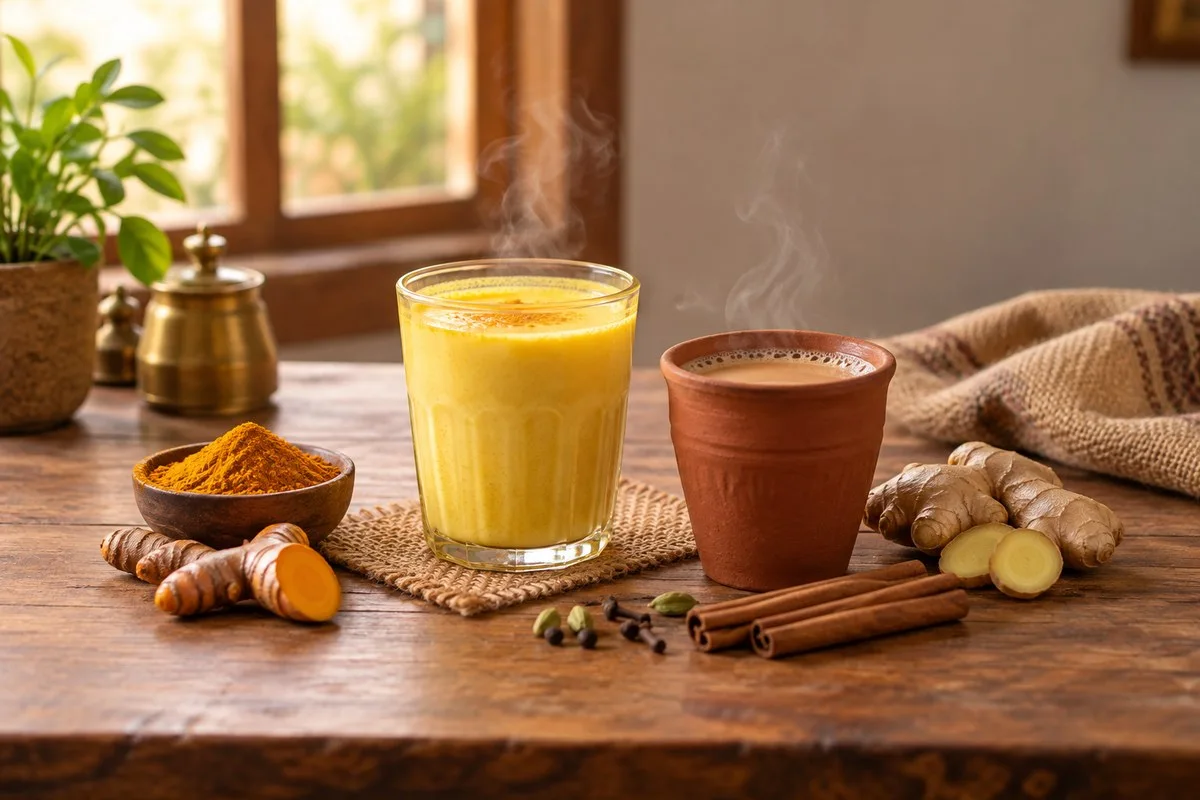
Haldi doodh - milk warmed with turmeric, often with a pinch of pepper, cinnamon or crushed nuts. In many homes it is the taste of winter bedtime.
Adrak or tulsi chai - tea simmered with fresh ginger or tulsi leaves, a standard offering when someone feels a little under the weather, and an everyday comfort otherwise.
Kadha - a strong simmered decoction of spices like black pepper, cinnamon, cloves and ginger. Families have their own recipes, and opinions about them are held firmly.
Warm lemon-honey water - a common morning ritual, especially for people who find plain cold water unappealing in winter.
These are household traditions, and there is nothing wrong with them. In normal food amounts, these ingredients are simply food. What they are not is medicine: enjoying them is fine, expecting them to treat an illness is where people get disappointed.
What warm drinks can and cannot do
They can: warm you up, comfort a scratchy throat for a little while, help you drink enough fluids, and give you a pleasant daily ritual. For most people that is reason enough.
They cannot: prevent or cure colds or flu, "boost immunity" in any proven everyday sense, detox your body, or burn fat. Your immune system is built by ordinary things - sleep, varied food, movement, and managing stress - not by any single drink. If a packet or a post promises more than comfort, be sceptical of the packet, not the tradition.
One honest caution: concentrated versions are a different thing from kitchen versions. Strong extracts, shots and supplement-strength preparations are not the same as a cup of chai, and anyone who is pregnant, breastfeeding, on regular medication, or managing a health condition should check with a doctor before making strong herbal preparations a daily habit.
Watch the sugar, not the tradition
The biggest everyday issue with winter drinks is rarely the spice - it is the sweetening. Several cups of well-sweetened chai, creamy hot chocolate, packaged "health" drinks and sweetened kadha can quietly add up across a day, for women and men alike. You do not have to give anything up; most people find it easy to simply notice how many sweet cups happen daily and adjust the sweetness itself. Jaggery and honey change the taste, not the fact that they are sugars.
Simple habits around winter drinks
Keep the ritual, lighten the load. Enjoy the haldi doodh or adrak chai you love, and let the sweetness drift downward over time - taste adjusts faster than most people expect.
Use them to stay hydrated. If cold water puts you off in winter, warm water, lightly spiced or plain, is an easy way to keep drinking enough through the day.
Mind the caffeine clock. Chai and coffee late in the evening can chip away at sleep for many people, and sleep does more for how you feel in winter than any drink can.
Let drinks be drinks, not meal replacements. A warm drink alongside breakfast is lovely; a warm drink instead of breakfast usually backfires by mid-morning.
When a warm drink is not the answer
A scratchy throat after a cold morning is one thing. A fever, a cough that hangs on, breathlessness, or feeling genuinely unwell is another, and no kitchen drink is the right tool for those. For most people winter sniffles pass on their own, but if symptoms worry you, last longer than expected, or you have an existing health condition, that is a conversation for a doctor - not for a stronger kadha.
Where FitByVeda fits
FitByVeda sells Ayurvedic supplements in two ranges: Weight Gain (the Fit Gain range) and Weight Loss (the Fat Loss range). Ingredient lists and product details are on fitbyveda.in under Products. This article is general lifestyle information, not a product recommendation, and no supplement or drink replaces everyday habits like the ones above.
Frequently asked questions
Do warm drinks actually help in winter?
For most people, yes - as comfort, warmth, hydration and ritual. What they do not do is prevent or cure illness, whatever the family WhatsApp group says. Enjoy them for what they genuinely offer.
Is haldi doodh good for immunity?
Haldi doodh is a well-loved household tradition, and milk with turmeric in food amounts is simply food for most people. But no single drink has been shown to "boost immunity" in everyday life - that comes from sleep, varied food, movement and stress management. Drink it because you enjoy it.
How many cups of chai a day is fine?
It varies from person to person. For most healthy adults the more useful question is how sweet each cup is and how late the last one lands, since sugar and late caffeine are the common issues. If caffeine affects your sleep or you have a health condition, your doctor's guidance comes first.
Are kadha and herbal shots safe to take daily?
In ordinary kitchen amounts, these ingredients are food for most people. Concentrated daily preparations are a different matter, and anyone pregnant, breastfeeding, on medication, or managing a condition should check with a doctor first. More is not automatically better.
Can warm drinks help with weight loss?
No drink burns fat by itself. Where warm drinks fit for most people is as a swap: a lightly sweetened homemade chai instead of a sweet packaged drink is a small, easy win within ordinary eating habits.
This article is general lifestyle information only and is not medical advice, a diagnosis, or a treatment plan. Everyone's body and health situation are different. If you have a medical condition, are pregnant, or have concerns about your health, please consult a qualified doctor before making changes to your diet or routine.
Your health, our care
Ready to start your wellness journey?
Shop 100% Ayurvedic supplements. Every order includes free 1-on-1 dietician support.